
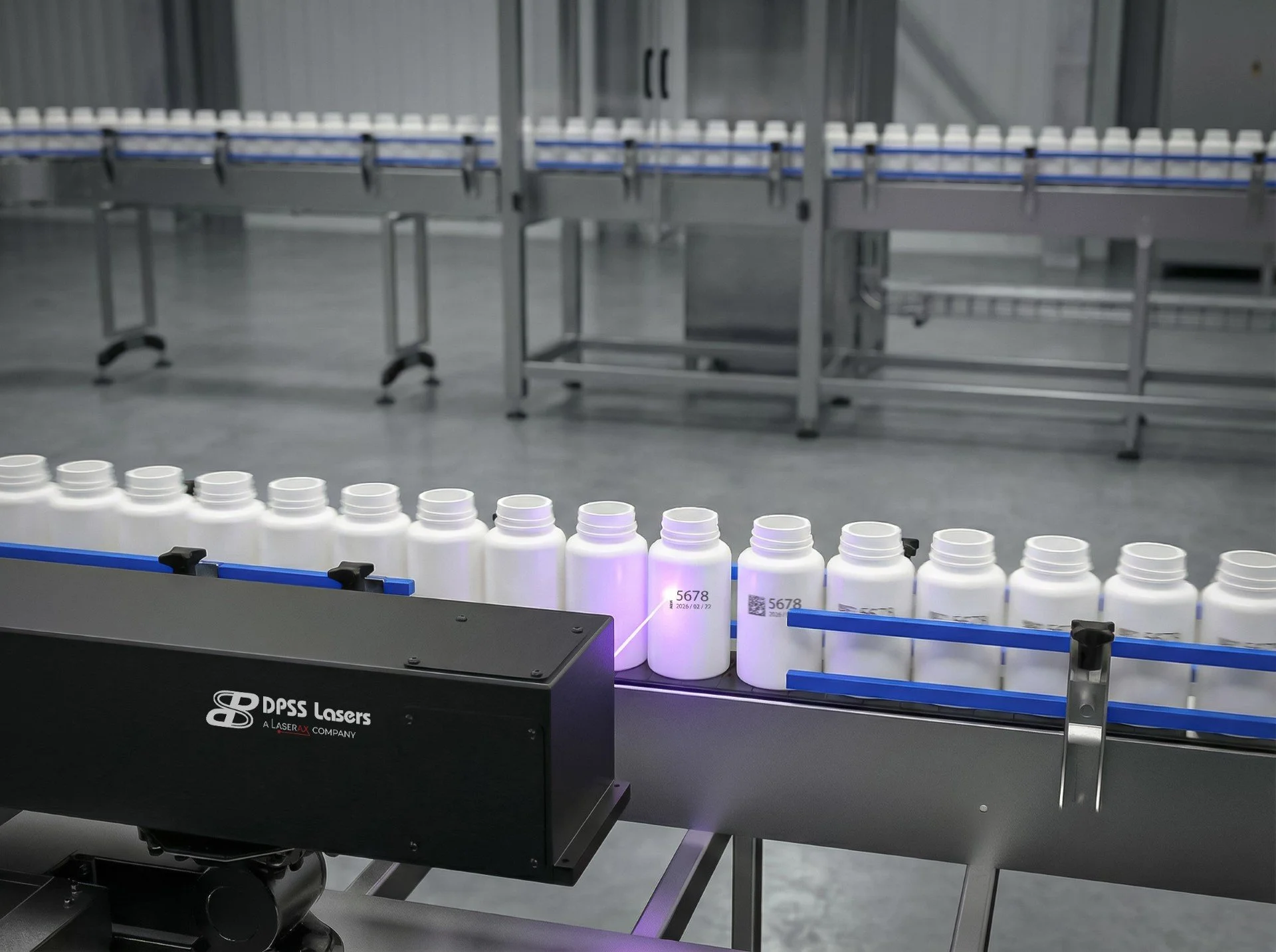
Medical device manufacturing places extremely demanding requirements on laser processing technologies. Components must meet strict criteria for traceability, material integrity, and long-term reliability, while complying with global regulations such as UDI (Unique Device Identification).
Any marking or micromachining process must therefore produce permanent, high-precision features without altering the functional properties of the device.
For these reasons, DPSS (Diode-Pumped Solid-State) lasers — particularly UV lasers operating at 355 nm — have become a preferred technology for medical device laser marking and precision micromachining.
Compared with traditional marking methods and other laser technologies, UV DPSS lasers provide superior precision, minimal thermal impact, and excellent compatibility with the polymers and metals commonly used in medical devices.
Precision Processing With Minimal Thermal Impact
One of the primary challenges in medical device laser marking is processing sensitive materials without introducing thermal damage.
Many medical components are manufactured from high-performance polymers, thin stainless steels, titanium alloys, and coated materials that are sensitive to heat-based processing methods. Excessive thermal input may cause:
surface deformation
discoloration
microcracking
changes in mechanical properties
UV DPSS lasers address this challenge through short-wavelength laser-material interaction.
Operating typically at 355 nm, these systems enable a process often described as photochemical ablation, where the laser energy breaks molecular bonds directly rather than relying primarily on thermal melting.
This interaction enables:
extremely fine feature sizes
high-contrast marking
minimal heat-affected zones
excellent edge definition
As a result, UV laser marking is particularly well suited for medical materials such as:
medical-grade plastics
polycarbonate
PEEK
silicone
stainless steel
titanium alloys
coated metals
Because the process introduces very limited thermal stress, delicate components can be marked or structured without cracking, melting, or altering the surrounding material.
Comparison With Other Medical Device Marking Technologies
Manufacturers evaluating laser marking solutions for medical devices often compare DPSS lasers with fiber lasers, CO₂ lasers, or mechanical engraving systems. While each technology has advantages in certain industrial applications, they often present limitations when applied to medical components.
Fiber Lasers
Fiber lasers typically operate at 1064 nm and interact with materials primarily through thermal absorption.
Although they are widely used for metal marking, this thermal interaction can produce:
localized melting
burr formation
heat-affected zones
discoloration on polymers
These effects can be problematic when processing thin medical components, delicate polymers, or coated surfaces.
CO₂ Lasers
CO₂ lasers operate at 10.6 µm and are commonly used for processing organic materials and certain plastics.
However, compared with UV DPSS lasers they typically offer:
lower marking resolution
wider feature sizes
increased thermal impact
For applications requiring micron-level precision or high-definition UDI codes, UV lasers provide significantly better control.
Mechanical Engraving
Mechanical marking methods rely on physical contact between a cutting tool and the workpiece.
This introduces several challenges:
tool wear and maintenance
contamination risks
inconsistent marking quality
mechanical stress on small components
Because laser marking is a non-contact process, it eliminates these limitations while providing significantly higher precision and repeatability.
Reliable UDI Laser Marking for Medical Device Traceability
Medical devices must comply with UDI regulations, which require permanent identifiers that remain readable throughout the product lifecycle.
DPSS laser marking systems are particularly effective for producing:
serial numbers
DataMatrix codes
QR codes
logos and identification markings
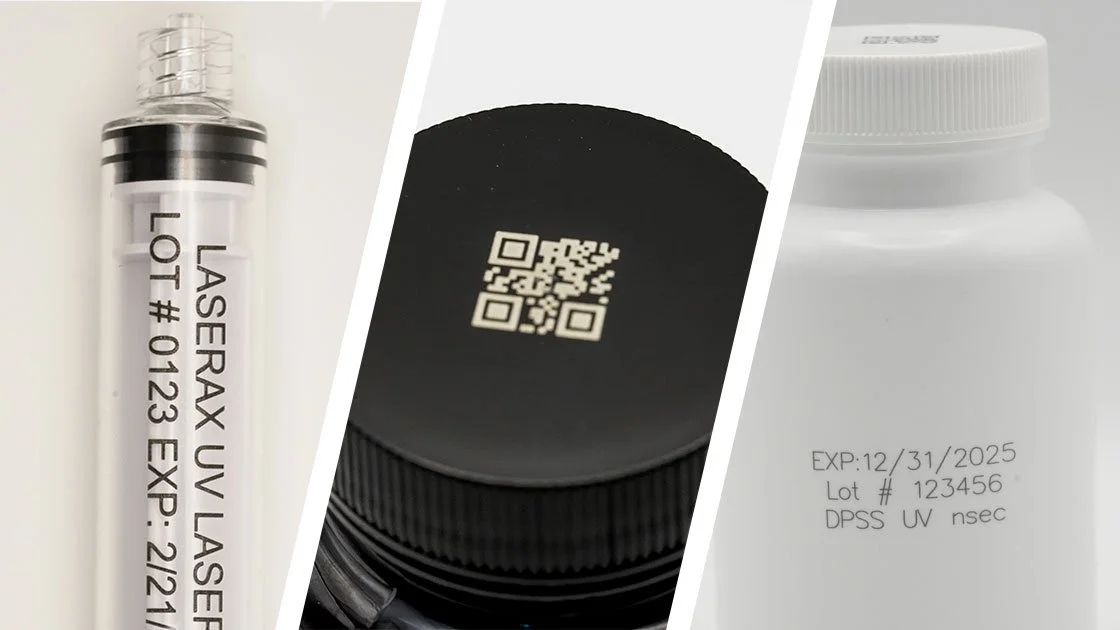
The short wavelength and small focal spot size of UV lasers enable extremely fine features with excellent contrast and edge definition. This makes it possible to mark very small medical components while maintaining reliable machine readability.
Typical devices requiring laser marking for UDI compliance include:
surgical instruments
implants
orthopedic devices
diagnostic equipment
medical electronics
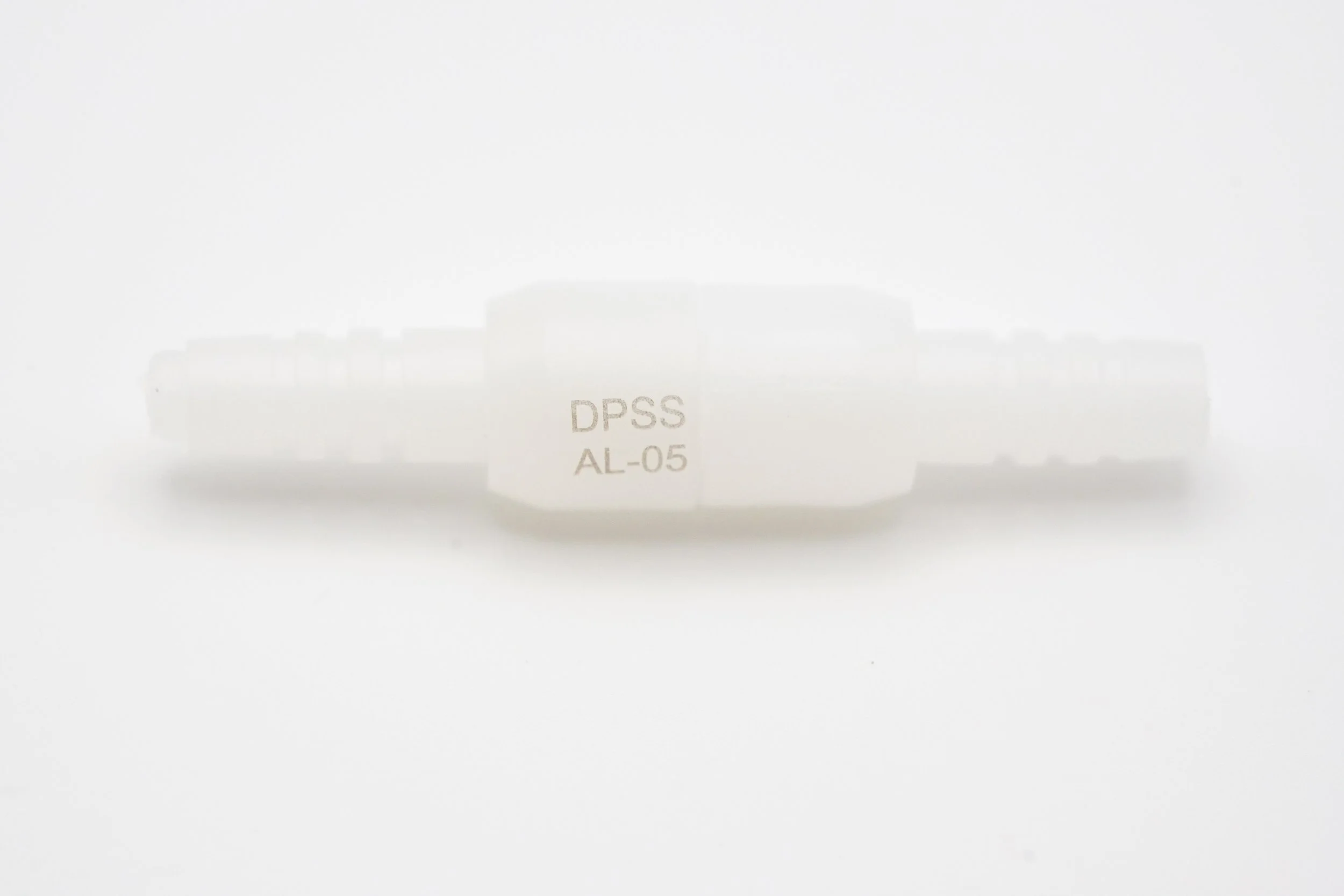
Because laser markings are permanent and resistant to sterilization cycles, they provide reliable long-term traceability.
Laser Marking on Critical Medical Device Components
Many medical devices require permanent markings on functional components where maintaining material integrity is critical.
DPSS lasers are frequently used for laser marking critical medical device parts, including:
surgical instruments
precision metal components
medical electronics housings
diagnostic equipment parts
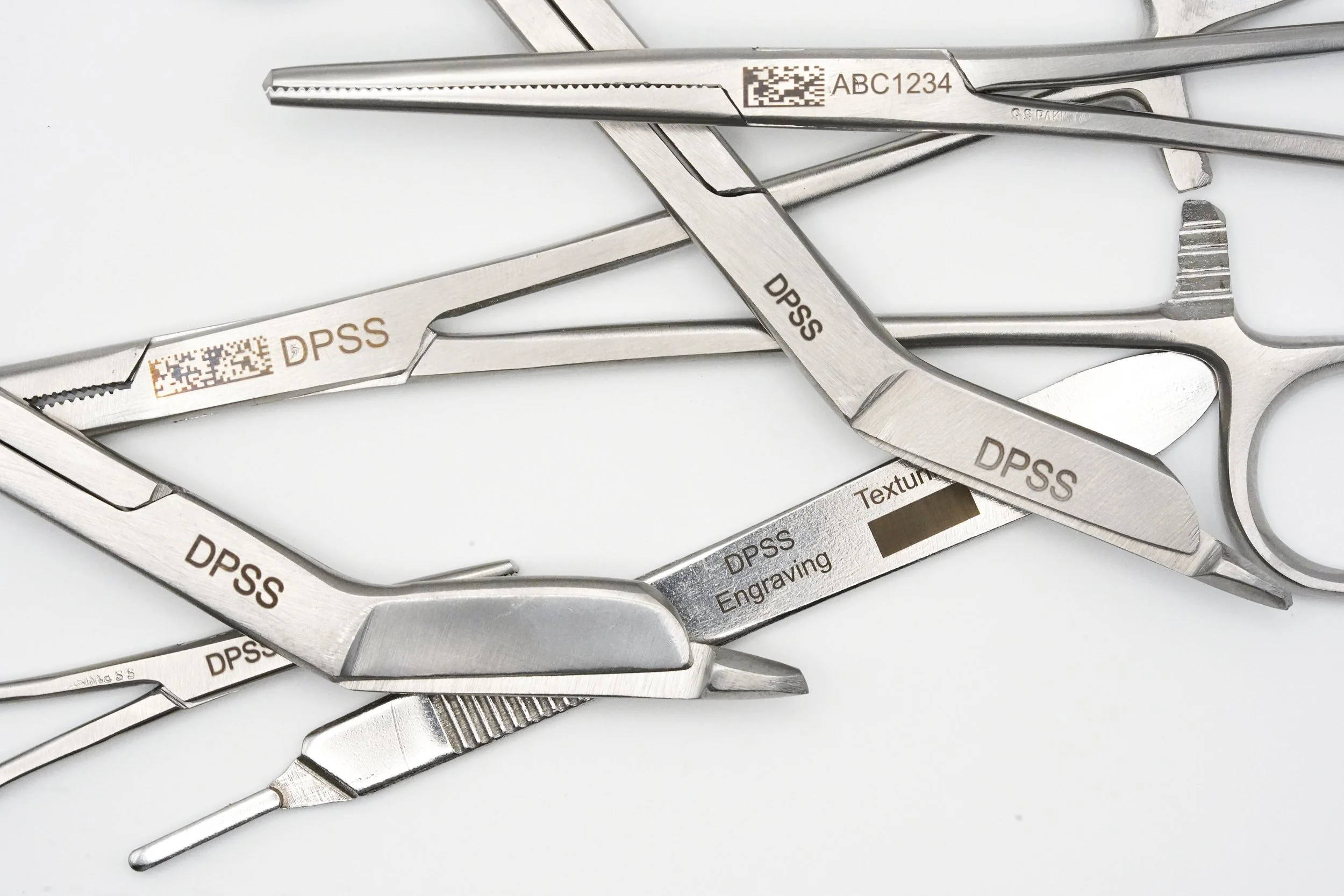
Because the process generates minimal heat-affected zones, the markings do not compromise the mechanical or functional properties of the device.
Other Applications of UV DPSS Lasers in Medical Device Manufacturing
Beyond identification marking, DPSS laser systems are widely used for advanced micromachining applications in the medical industry.
Catheter and Medical Tube Marking
Catheters and other flexible medical tubing require precise graduation marks and identification markings that remain visible during clinical use.
UV DPSS lasers enable high-contrast catheter marking on polymer tubing without damaging the underlying material. The low thermal impact is particularly important for maintaining the mechanical integrity and flexibility of catheter materials.
Micromachining of Medical Tubes
Many minimally invasive medical devices rely on micro-scale features in metallic or polymer tubes.
DPSS lasers enable precision processes such as:
micro-drilling in thin-walled tubes
slot cutting and patterning
micro-structuring for device functionality
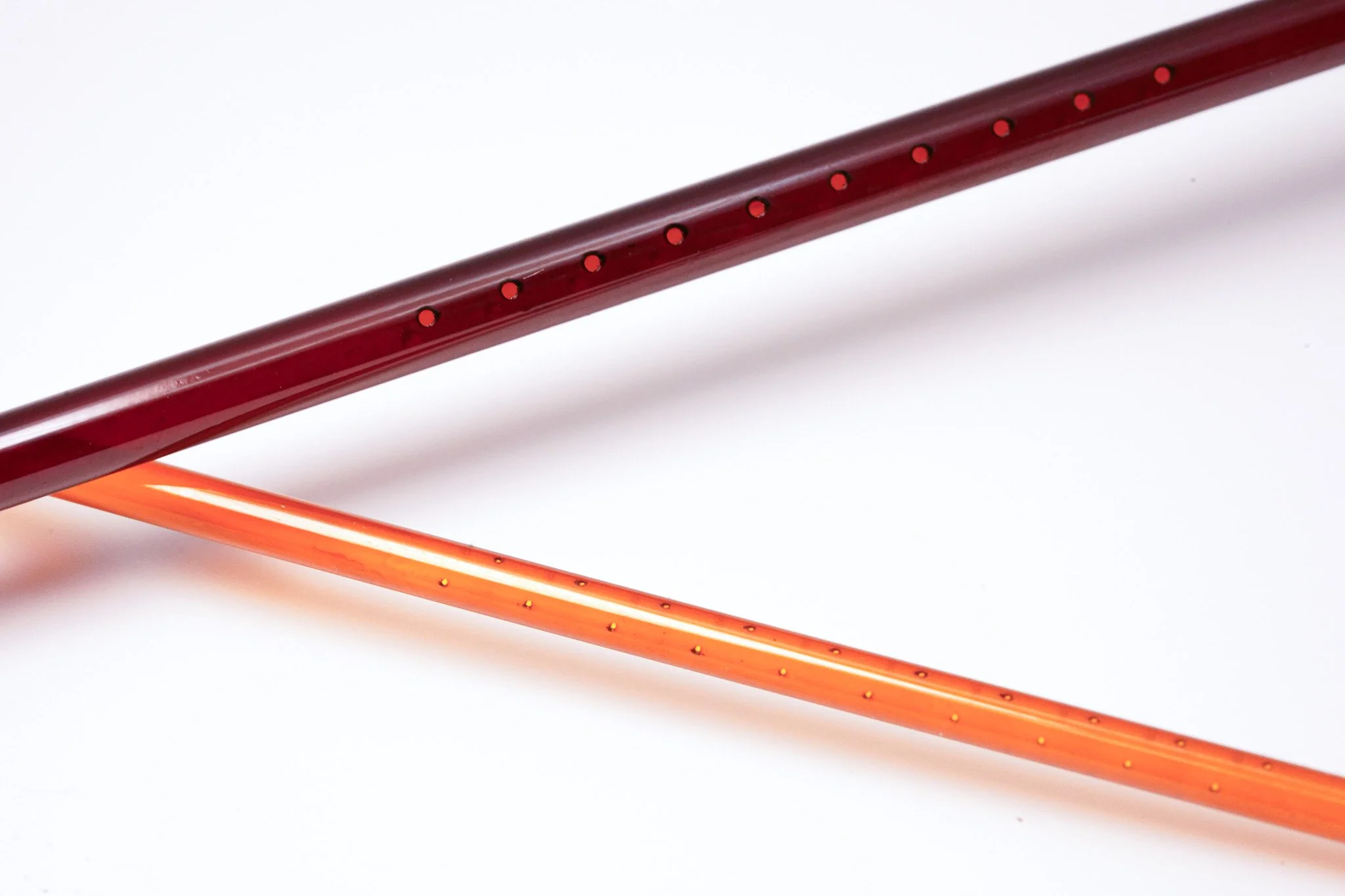
The high beam quality and small spot size of DPSS systems allow manufacturers to produce complex geometries with excellent dimensional control.
Surface Texturing of Titanium Implants
Laser surface texturing is increasingly used to improve osseointegration and adhesion of implants.
DPSS laser systems can generate controlled micro-scale surface structures on titanium implants, enhancing:
bone adhesion
implant stability
surface wettability
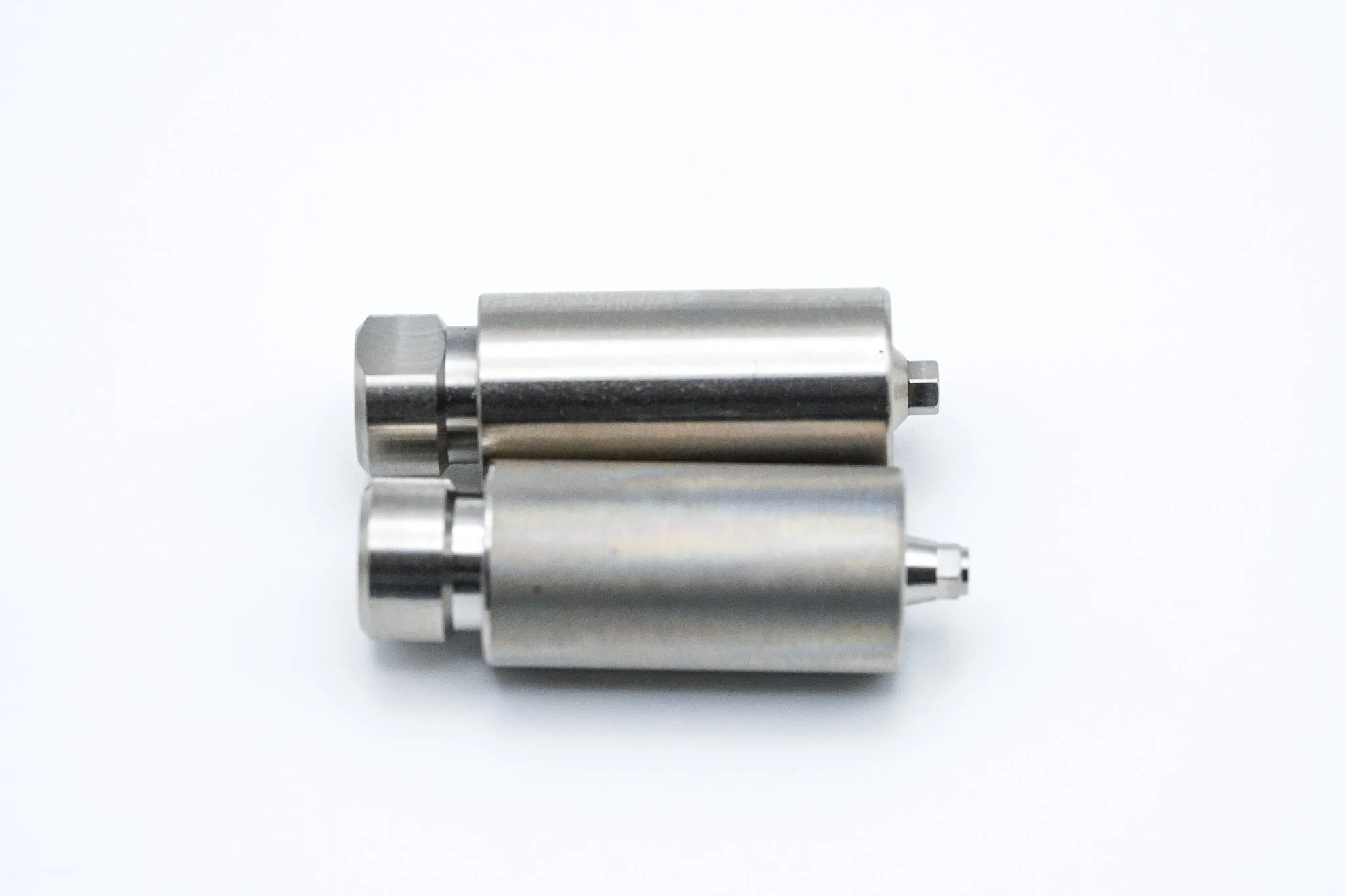
The high precision of UV laser processing allows manufacturers to create consistent and repeatable surface textures while maintaining tight control over surface morphology.
Real Manufacturing Challenges in Medical Laser Processing
Implementing laser processing in medical device manufacturing involves more than selecting the appropriate wavelength. Manufacturers must balance precision, throughput, material compatibility, and regulatory requirements while maintaining consistent process stability in high-volume production environments.
One common challenge is marking components that undergo repeated sterilization cycles. Processes such as autoclaving, chemical sterilization, and plasma treatments can degrade poorly applied markings.
UV DPSS laser marking produces permanent surface modifications rather than superficial discoloration, ensuring that identifiers remain readable throughout the product lifecycle.
Another key challenge is marking extremely small components or curved surfaces. Many medical devices — including catheters, microtubes, and surgical tools — offer very limited marking areas.
The small focal spot and excellent beam quality of DPSS lasers allow manufacturers to produce high-resolution DataMatrix codes and fine graduation markings even on miniature parts.
Material variability is also common in medical manufacturing. Components may include advanced polymers, multilayer coatings, passivated stainless steels, or titanium alloys, each interacting differently with laser energy.
UV DPSS lasers provide high levels of process control, allowing engineers to optimize pulse energy, repetition rate, and scanning parameters to achieve consistent results across different materials.
Finally, laser processing must never compromise the functional properties of the device. In applications such as catheter grading, implant surface texturing, or micromachining of thin tubes, excessive thermal input can affect mechanical strength, flexibility, or biocompatibility.
The low thermal impact of UV DPSS lasers preserves these critical properties while still delivering precise micro-scale features.
Why DPSS Laser Technology Is the Preferred Choice
As medical devices continue to evolve toward smaller geometries, advanced materials, and stricter regulatory requirements, manufacturers require processing technologies that combine precision, reliability, and process stability.
UV DPSS laser systems provide:
exceptional marking precision
minimal heat-affected zones
compatibility with sensitive medical materials
permanent high-contrast markings
reliable compliance with UDI requirements
advanced micromachining capabilities
For these reasons, DPSS laser technology has become a critical tool in modern medical device manufacturing, enabling both high-quality medical device laser marking and precision microprocessing applications.